
Public Parklet Program
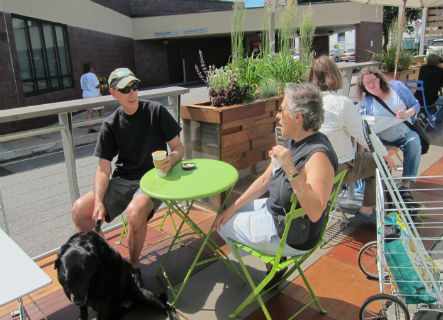
Public parklets are small public seating areas where people can eat, rest, and socialize on repurposed street space.
Parklets create seasonal pedestrian space, improving the quality of life in Boston’s neighborhoods and commercial corridors. They bring activity to small business districts and are a unique approach to expanding access to public open space in areas with narrow sidewalks.
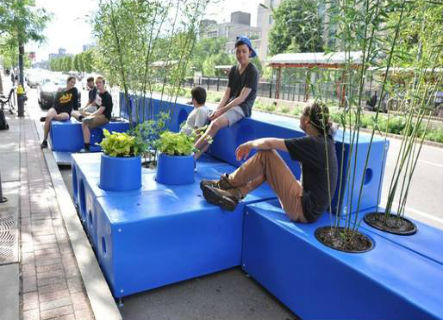
Parklets can combine extra seating, trees, flowers, shrubs, umbrellas, Wi-Fi, art, or lighting to provide comfortable spaces for people to sit and socialize. We encourage them in every neighborhood and community— especially those with frequent pedestrian activity with minimal seating options for shop owners and residents.
Guidelines and Applications
ApplicationsParklet partners
Partners are responsible for the creation, maintenance, permitting, outreach, storage and partner liability for the public parklet.
Parklet Partners are encouraged to communicate with their neighbors to gain community support for the parklet and to address any issues that arise including ongoing maintenance needs. Partners will need to show evidence or letters of support from the potential area Main Streets organization, property owners, adjacent businesses, district councilor, and neighborhood board for to install the parklet.
Partners will also need to enter into a maintenance agreement with the City of Boston to ensure proper upkeep and insurance needs comply. Parklet partners will need to maintain insurance season to season to cover the parklets and indemnify the City. Partner maintenance includes:
- cleaning
- plant watering
- storage of any furniture, and breakdown and winter storage of the parklet season to season.
Partners will need to identify the team of people who will be installing and uninstalling the parklet. We also need to know the point of contact if the parklet needs to be moved or broken down in case of an emergency.
Downloads
Program Details
Location/Specifications
- Parklets cannot be located on top of any public utility.
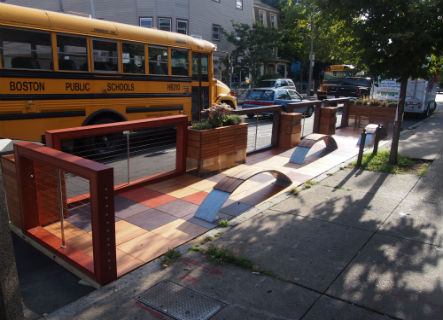
- Parklets must have an accessible entrance from the sidewalk.
- Raised parklets must provided unobstructed water flow and drainage underneath.
- Parklets must be separated from traffic with a hard edge through railings or planters, and allow visibility of users and business.
- Parklets cannot obstruct other street furniture, plantings or public signage.
Design and placement guidelines
- Parklets must have posted signage indicating that it is a public space (sign specs to be obtained from BTD).
- Parklet should have two wheel stops installed at either end of the parklet as a buffer to maintain an efficient distance from the vehicle traffic and parked cars adjacent to the seating area.
- Parklets should have reflective materials on barriers, cones, or bollards at either of the parklet.
- Parklets must be able to be easily dismantled and/or moved in case of emergency or hazard situations.
Rules of service
- There is no table service or alcohol consumption allowed on parklets at any time.
- No additional awnings can be installed onto the parklets after final approvals are made, unless confirmed by city design approval.
- Hearty plantings are required on the parklets, selection of these and type will be confirmed in final design approvals.
- No electrical cords are allowed to lay across the public right of way from the partner establishment.


_FINAL.png)